

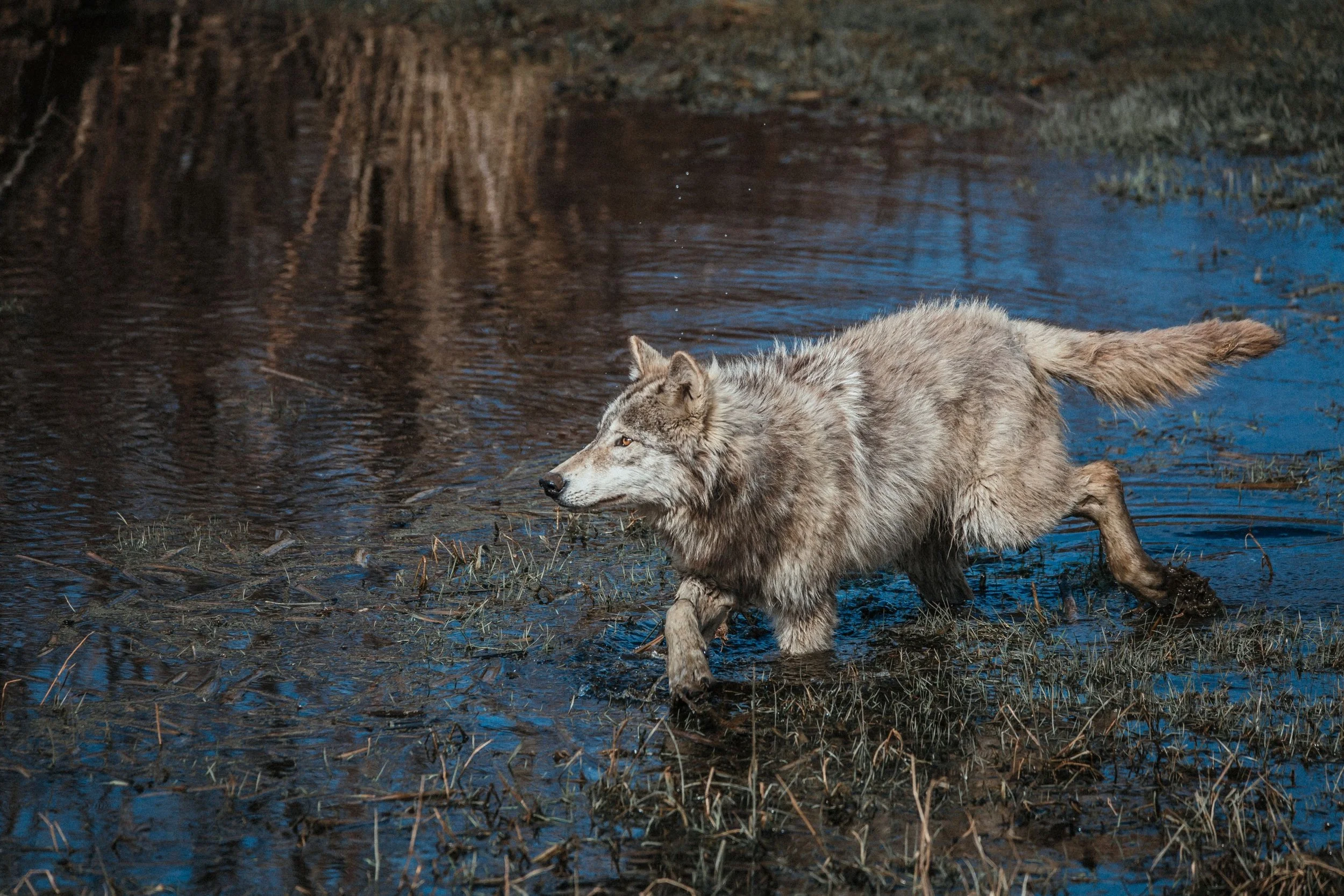
Wolf Conservation

Conservation is defined as “careful preservation and protection of something”. Therefore, wildlife conservation is the protection and preservation of wildlife and their habitats.
Wildlife conservation is a set of actions designed to protect wildlife species (animal or plant) and preserve thier habitats and ecosystems through promotion of sustainable practices.
Wildlife conservation involves a multitude of strategies catered toward the species and its unique needs. Conservation campaigns or projects can include the following components:
· Habitat protection
· Habitat restoration
· Nation or state-wide policy change
· Legal protections
· Public education campaigns
What is Conservation?
What are the benefits of wildlife conservation?
Wildlife conservation ensures that the unique wildlife species we love today are there for the next generation to appreciate.
Benefits of wildlife conservation include (but are not limited to):
-
Example: Bees pollinate flowers which allow plants to reproduce and provide food for animals (including humans!)
-
Example: Trees create breathable air, help regulate climate through carbon sequestration, and reduce air pollution
-
Example: Many pharmaceutical drugs are derived from compounds found in plants, fungi, and animal species.
-
Example: People feel strong connections to wildlife and animals allow us to feel closer to nature.
-
Example: Wildlife tourism is a major contributor to global and local economies. People travel across the world to experience unique ecosystems and observe animals in their natural habitats.
What are some challenges of wildlife conservation?
-
Conservation solutions and campaigns can have large monetary requirements. For instance, the creation of protected land and/ or restoration of a habitat requires resources, time, and labor.
-
Alienating or excluding local communities undermines long-term success. When the public that is directly affected by the conservation effort is left out of the conservation, the support needed by local communities is not provided.
-
Competing interests of communities, conservation professionals, and governing bodies makes it difficult to satisfy all stakeholder wants and needs.
-
Once policies or laws are passed to protect a species, there needs to be enforcement by those regulatory bodies. Without legal repercussions, many conservation efforts fail.
History of Wolf Conservation in the U.S.
· Gray wolves historically lived across North America and coexisted with Indigenous peoples. There were an estimated 250,000 to 2,000,000 wolves living in what would be the United States before the 17th century.
· During colonization by European settlers, wolves were hunted across the 13 colonies. This all began with the first wolf bounty being posted in 1630 in the Massachusetts Bay Colony.
· By the mid-20th century, gray wolves were nearly eradicated in the U.S. with numbers estimated to be a low as 300 individuals.
· In response, the Endangered Species Act (ESA) was passed in 1973 to protect animals and plants at risk of extinction. The ESA allows the federal government to list species as endangered (in danger of extinction) or threatened (likely to become endangered). Once listed, species are given legal protection, and efforts are made to conserve their habitats and support recovery.
· Wolves were listed as endangered under the Endangered Species Act (ESA) in 1974.
Brief timeline of wolf protections
in the United States:
o 1978: Gray wolves were classified as threatened in Minnesota and endangered elsewhere in the lower 48 states.
o 1995: Wolves were reintroduced in Yellowstone and Idaho, sparking ecological recovery.
o 2003: FWS divided gray wolves into three populations and reclassified some as threatened. Courts overturned the rule.
o 2008–2009: ESA protections were removed from the Northern Rockies wolves but reinstated after legal challenges.
o 2011: Congress delisted wolves in the Northern Rockies through legislation, a unique move.
o 2012–2017: Protections for wolves in Wyoming were removed, reinstated by court, and remain off today.
o 2017–2022: Under the Trump administration, ESA protections were removed nationwide, but courts restored protections in 2022 (except for the Northern Rockies).
What are some current challenges for Wolf conservation?
Today wolf conservation faces several challenges, the most impactful being habitat loss and legislative changes to their protections. Due to the lack of legal protections, Wolf hunting is legal in the following states:
· Alaska
· Idaho
· Montana
· Wyoming
Currently, wolves occupy about 30% less area than they historically did worldwide and occupy about 10% of their historic range in the United States. This is due to habitat loss for the species, making it difficult for wolves to establish enough territory to sustain themselves. Wolf habitat loss is caused by humans whether through land development (both urban and agricultural) or deforestation.
But it's not all bad! Wolf conservation efforts are still underway in the United States, most notably with the reintroduction of 25 individuals into the Colorado Rockys over the course of two years. Even with the continued decreasing of their protections, many conservationists and environmental organizations speak out against these legislation changes and continue to advocate for their preservation.
How you can help:
Outreach:
Support other Wolf Conservation Centers and Organizations:
Advocacy:
Contact your Senator / Representative and let them know that you support wolf protections and the Endangered Species Act.
-
1 Merriam-Webster. n.d. Conservation. https://www.merriam-webster.com/dictionary/conservation. Accessed 10 Jul 2025.
2. International Fund for Animal Welfare [IFAW]. n.d. What Is the Goal of Wildlife Conservation? IFAW Journal. https://www.ifaw.org/journal/goal-widlife-conservation. Accessed 11 Jul 2025.
3 National Geographic Society. 2025. Wildlife Conservation. National Geographic Education. Last updated 12 Mar 2025. https://education.nationalgeographic.org/resource/wildlife-conservation/. Accessed 11 Jul 2025.
4 World Wildlife Fund [WWF]. n.d. Wildlife Conservation. World Wildlife Fund. https://www.worldwildlife.org/initiatives/wildlife-conservation. Accessed 11 Jul 2025.
5 Mukpo, A. 2016. 5 reasons why many conservation efforts fail. Mongabay. 30 Mar 2016. https://news.mongabay.com/2016/03/5-reasons-why-many-conservation-efforts-fail/. Accessed 11 Jul 2025.
6 Dewane, M. 2024. The history of gray wolf protections in the Lower 48. Defenders of Wildlife Blog. 2 February 2024. https://defenders.org/blog/2024/02/history-of-gray-wolf-protections-lower-48-0. Accessed 11 Jul 2025.
7 Mission:Wolf. n.d. Brief history of wolves in the wild. https://missionwolf.org/brief-history-of-wolves-in-the-wild. Accessed 11 Jul 2025.
8 International Wolf Center. n.d. Gray wolf timeline. https://wolf.org/wolf-info/gray-wolf-timeline/. Accessed 11 Jul 2025.
9 U.S. Fish and Wildlife Service [USFWS]. n.d. Endangered Species Act. U.S. Fish and Wildlife Service. https://www.fws.gov/law/endangered-species-act. Accessed 11 Jul 2025.
10 Morreto, M. 2025. Bill to strip gray wolves of federal protections passes key committee. The Wild Hunt. April 14, 2025. Available at: https://wildhunt.org/2025/04/bill-to-strip-gray-wolves-of-federal-protections-passes-key-committee.html.
11 Wolf Conservation Center. 2025. How many wild wolves are in the United States? U.S. wolf populations. New York Wolf Conservation Center. Available at: https://nywolf.org/learn/u‑s‑wolf‑populations/.
12 Contreras, L. 2025. Status, Threats, and Recovery of the Gray Wolf. Wolves in the State of Oregon blog, Oregon State University. Available at: https://blogs.oregonstate.edu/graywolfconservation/
13 Swanson, C. 2025. Second wolf release confirmed by Colorado Parks and Wildlife. CBS News Colorado. January 19 2025. Available at: https://www.cbsnews.com/colorado/news/second-wolf-release-confirmed-colorado-parks-wildlife/ tion text goes here