

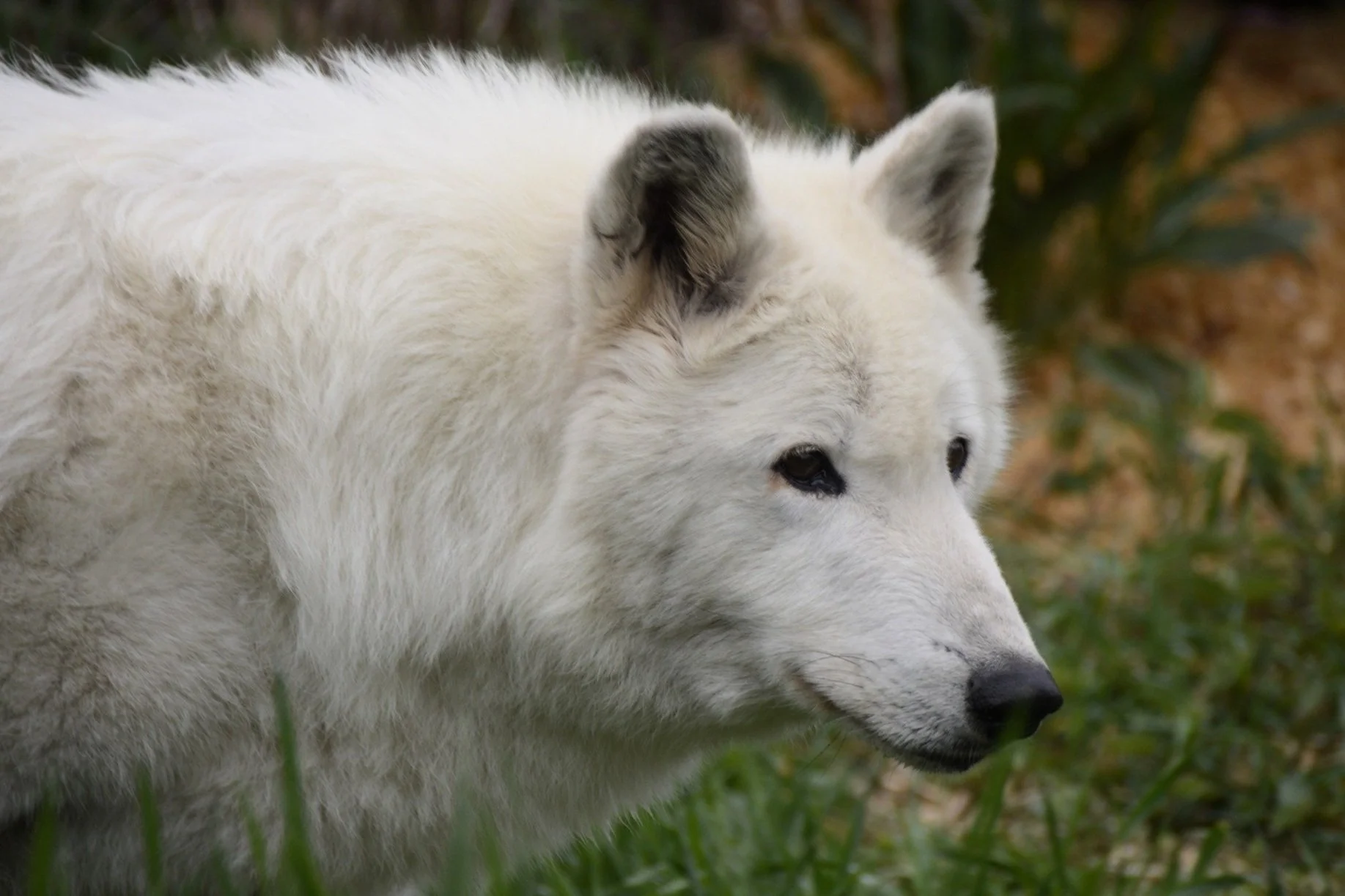
General Wolf FAQs
-
It is estimated that there are between 6,000 - 8,000 wolves living in the lower 48 United States and between 8,000-11,000 living in Alaska.
-
Wolves typically live for an average of 4-6 years in the wild. However, there are many wolves that don’t make it past puppyhood, and some that live to be 9 or 10 years old. The oldest wolf documented in living in Yellowstone National Park lived to be 12.5 years old.
-
There are only 2 recognized species of wolf recognized worldwide. These would be the gray wolf (Canis lupus), and the red wolf (Canis rufus). While there is no concrete consensus about how many gray wolf subspecies there are, there are over 30 subspecies of gray wolf within the world today, including the Arctic Wolf (Canis lupus arctos), the Mexican Gray Wolf (Canis lupus baileyi) and the Eastern wolf (Canis lupus lycaon).
Some researchers refrain from classifying wolves into subspecies and believe that North American gray wolf subspecies and the eastern wolf are a different species.
-
Wolves eat primarily large prey consisting of elk, deer and caribou. Wolves also prey on smaller animals such as beavers, hares, and rodents and have been documented fishing in coastal areas and lakes. Wolves are opportunistic hunters, eating whatever resources they can find within their territory.
Wolves have recently been documented eating blueberries off of bushes in the summer months by Voyageur’s Wolf Project. https://www.youtube.com/watch?v=0-QzCFs6-SY
-
Wolves can survive on approximately 3 pounds of food daily, but wolves typically do not eat every day as finding prey depends on many factors. If wolves gorge on large prey, they can consume up to 20 pounds of food in a single meal.
-
Gray wolves can weigh anywhere on a scale from 40-140 pounds, depending on their geographic location.
Adult male gray wolves typically weigh between 90 and 110 pounds, and may exceed 5 feet in length from nose to tail tip, standing about 30 inches tall at the shoulder. Female gray wolves are typically about 20% smaller than males.
-
An average gray wolf’s paw is 3 ½ to 4 ½ inches long (without claws) and 3 to 4 ½ inches wide.
-
A wolf pack is simply a family of wolves that typically consists of a breeding pair, their offspring and other non-breeding adults. The pack works together to hunt, raise pups and defend their territory.
-
Wolf packs typically consist of 6-10 individuals. The largest wolf pack documented in North America was the Druid Peak wolf pack in Yellowstone National Park. This pack, established through reintroduction efforts in 1996, reached its peak size of 37 members in 2001.
-
Wolves typically breed between late January through early March. A wolf’s gestation period is around 60- 63 days.
-
A wolf’s territory can span from 8 square miles to as large as 1,000 square miles. A wolf’s territory size often depends on the resources available within that area.
-
Wolves howl to gather their pack members, establish their territory, communicate across long distances and to maintain social bonds.
-
A wolf’s bite force can range from 400-1200 lbs/square inch (PSI). A human’s average bite force is around 120 PSI while a large domestic dog is around 320 PSI.
-
Wolves can travel as far as 30 miles in one day while pursuing prey.
-
Wolves typically trot at a speed of approximately 5 mph and can run in short bursts of speeds as fast as 35 mph - typically while pursuing prey!
-
Wolf attacks on humans are extremely rare, and there have been very few deaths attributed to wolves in North America. There have only been two documented human deaths caused by wolves in North America in the last century. Between 2002 and 2020, researchers found 26 fatal attacks throughout the entire world. Of those, 14 were due to rabies.
https://wolf.org/wp-content/uploads/2022/06/whatbigteeth.pdf
-
Wolves can be the cause of livestock loss or depredation, however livestock animals are not a wolf’s main source of food. Wolf depredation reports throughout multiple states where large wolf populations reside (Montana, Minnesota, Idaho, Wyoming) show that wolves are the cause of less than 2% of livestock loss. In 2024, the state of Montana held over 2,000,000 livestock animals and the state’s 2024 wolf depredation report documented 45 wolf related livestock depredations.
There are multiple effective non-lethal management techniques that can keep wolves away from livestock. These techniques range from fencing and fladry to range riding and utilizing livestock guardian dogs to keep wolves away from farms or ranches. In a study published in April 2025 (https://www.sciencedirect.com/science/article/pii/S019005282500015X), these methods were proven to reduce wolf-livestock conflict by 91%.
Many states offer ranchers or producers compensation for livestock depredations that are proven to be caused by wolves.
-
Kingdom Animalia (all animals)
Phylum Chordata (animals with notochords)
Subphylum Vertebrata (animals with a skeleton of bone or cartilage)
Class Mammalia (mammals)
Order Carnivora (carnivores)
Family Canidae (dog family)
Genus Canis (dogs)
Species lupus (gray wolves); rufus (red wolves); simensis (Abyssinian or Ethiopian wolf, which some scientists think is a jackal)
-
An ambassador wolf is a wolf who has the job of educating the public about wolves, hopefully encouraging understanding and empathy of a misunderstood species.